
Add Row
Add Element
cropper
update
Trusted Local Realtor
update
Add Element
  • Home
  • Categories
    • we buy houses
    • sell your house fast
    • stop foreclosures
    • baltimore
    • Extra News
April 12.2025
3 Minutes Read

Explore Screened-In Porch Ideas to Enhance Comfort and Style

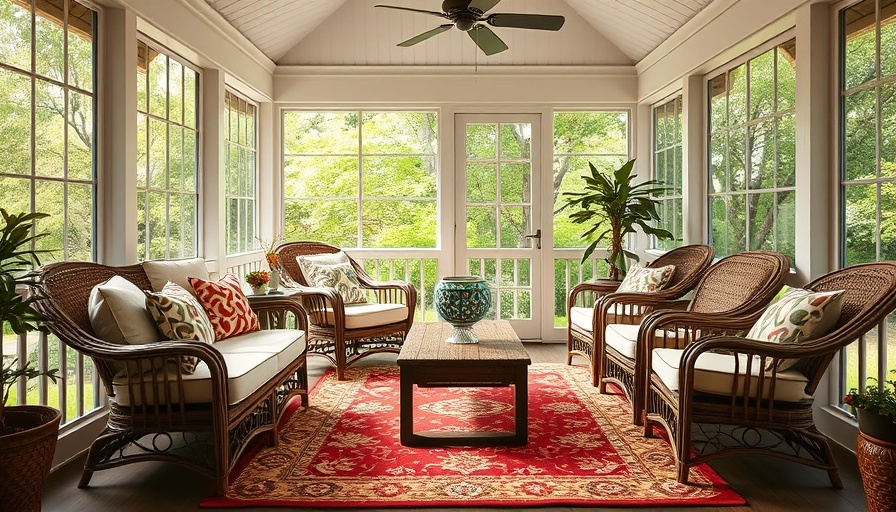
Screened in porch ideas with wicker furniture and colorful rug

Transform Your Home with a Screened-In Porch

Have you been dreaming of a tranquil space where you can enjoy nature's beauty without the interference of pesky insects? Think no further than a screened-in porch—a perfect fusion of comfort, style, and enjoyment that revitalizes any home environment. This simple yet transformative upgrade allows homeowners to enjoy a seamless blend of indoor comfort and outdoor allure.

Understanding the Charm of Screened-In Porches

As your connection to the outdoors, a screened-in porch serves as a protective barrier while still allowing fresh air and natural light to flood in. It’s the ideal gathering spot for family and friends, where you can sip coffee on a crisp morning or share stories under the stars without worrying about bugs. Landscaping expert Redman Svedberg notes that these spaces encourage outdoor living year-round, blending the cozy indoors with the vibrant outdoors.

1. Crafting the Perfect Location

Your screened-in porch should complement your lifestyle effectively. Consider the sun’s path and how it interacts with your space. East-facing porches can capture the morning sun, creating a bright atmosphere for breakfast, while those facing west can provide a serene sunset viewing area. Think about privacy and noise levels too; placing your porch strategically can make a big difference in how much you enjoy it.

2. Cozy Design Elements

Choosing cozy design elements can turn your porch into a retreat. Adding comfortable furniture, throw pillows, and blankets can make it inviting. Incorporating details like a vintage porch swing or a hammock adds an element of nostalgia and relaxation. Decorating with soft lighting such as string lights or lanterns can create a calming ambiance, perfect for evening gatherings!

3. Selecting Stylish yet Durable Materials

When choosing materials for your screened-in porch, durability is key. Opt for weather-resistant options that don’t compromise on style. Fabrics like acrylic or marine-grade materials for furniture are great options as they withstand the elements while maintaining their appearance. Wood finishes offer natural beauty but ensure they are treated for longevity.

4. Enhancing Comfort with Ceiling Fans

Maximize airflow by including ceiling fans in your porch design. Not only do they enhance comfort during warm summer days, but they also add a stylish element to the space. Choose fans that complement your décor and efficiently circulate the air to keep your screened-in porch inviting all day long.

5. Bringing Nature Indoors

What better way to enjoy the outdoors than by incorporating plants into your porch? Plants can make your space feel even more alive and vibrant. Choose low-maintenance houseplants like ferns or succulents that thrive in the filtered light of your screened-in porch. They're great conversation starters and can enhance both aesthetic appeal and air quality!

6. Extending Your Porch’s Usability

Screened-in porches can be versatile throughout the seasons. Consider adding outdoor heating elements for a cozy evening in the fall or installing removable screens for a change in climate. With creativity, a screened-in porch can be an adaptable space, transforming into a sunroom or a protected garden nook as needed.

7. Next Steps: Exploring Additional Options

After you create your dream screened-in porch, consider whether adding a lanai might be beneficial. A lanai is a wonderful extension for outdoor living, offering more protection from wind and rain. It opens up additional possibilities for outdoor enjoyment while ensuring comfort and style.

Conclusion: Enjoying the Indoor/Outdoor Flow

A screened-in porch is not just an aesthetic enhancement for your home; it symbolizes a lifestyle that prioritizes nature and comfort. As you relish the fresh air, the sounds of nature, and the soothing environment, you'll understand why this simple upgrade can become a cherished aspect of your everyday life. So, what’s stopping you? Start planning your screened-in porch today and turn that dream into reality!

Extra News

8 Views

0 Comments

Write A Comment

*
*
Related Posts All Posts
01.27.2026

Discover Why Indianapolis is the Most Buyer-Friendly Market in 2026

Update Indianapolis: A Bright Beacon for Homebuyers In a recent report by Zillow, Indianapolis has earned the title of the most buyer-friendly real estate market for 2026, making it a prime target for aspiring homeowners. This reputation comes as homebuyers increasingly seek areas with a favorable pricing landscape and manageable monthly mortgage costs. With a typical home value around $283,040, Indianapolis presents a market that balances affordability with modest growth, promising a less stressful homebuying experience. Understanding the Affordability Landscape What sets Indianapolis apart is its appealing affordability for median earners. According to Zillow Senior Economist Dr. Orphe Divounguy, buyers can expect to allocate only 26.9 percent of their monthly income to mortgage payments, comfortably below the generally accepted 30 percent threshold. This statistic positions Indianapolis amongst other affordable markets such as Oklahoma City, Memphis, and Detroit—all boasting similar monthly income shares for mortgage payments. The Bigger Picture in Buyer-Friendly Markets Indianapolis isn't alone in the limelight. Zillow's findings reveal that other cities in the South, Midwest, and Mid-Atlantic regions also provide attractive opportunities for homebuyers. Cities like Atlanta, Charlotte, and Tampa, while experiencing flat or even slight declines in home interest, are also recognized as markets where buyers can negotiate more easily as the winter months slow activity. For instance, areas such as Pittsburgh and Memphis stand out for their lower home values, which can be incredibly enticing for first-time buyers or those looking to downsize. Steady Growth and Future Prospects While Indianapolis displays a calm market affected by a 0.2 percent monthly increase and a 2.9 percent annual increase in home values, this steady growth opens an avenue for potential buyers who have been eyeing a favorable entry point. Dr. Divounguy emphasizes the importance of strategic pricing for sellers in such an environment. As competition remains lower, buyers benefit from not feeling rushed, fostering an atmosphere for thoughtful decision-making. Buying Amidst Challenges Yet, amid this encouraging news, potential homebuyers should remain aware of the broader national trends. For some cities, particularly hotter markets like Miami, the stark contrast is visible as median earners face mortgage payments eating up an alarming 46.7 percent of their income, showcasing the disparities evident in current real estate landscapes. Conclusion: Why Be Part of This Growing Opportunity? In summary, Indianapolis’ status as the most buyer-friendly market in 2026 provides both a hopeful narrative for first-time buyers and a poignant reminder about the dynamics of real estate. For those considering a home purchase, Indianapolis offers a unique blend of affordability and potential growth, making this an opportune moment to dive into homeownership. With the right strategies, both buyers looking for their first home and sellers aiming to capitalize on this market can thrive. If you have been patiently waiting for the right time to make a move, Indianapolis may just be the city you need to consider.

01.27.2026

Making Sense of Home Affordability: A Guide for Future Homeowners

Update Understanding Home Affordability: More Than Just Numbers When contemplating how much house you can afford, the conversation goes beyond just your maximum mortgage approval. While lenders provide a ceiling on what they can lend, the reality of home affordability truly hinges on how that monthly mortgage payment integrates into your broader financial situation and your long-term lifestyle ambitions. A house may appear affordable at first glance, but a deeper dive into expenses reveals whether it fits comfortably within your financial landscape. The Core Elements of Home Affordability Numerous factors interplay in defining how much home you can afford. Key variables include: Your Income and Employment Stability: Stability of income is fundamental. Lenders scrutinize gross monthly earnings to gauge how much you can comfortably afford. Debt-to-Income (DTI) Ratio: This critical number signifies what percentage of your gross income goes towards debt repayments, typically viewed favorably if it remains below 43%. Your Credit Score: Higher scores generally result in better interest rates, affecting overall affordability. Loan Characteristics: The type and term of your mortgage, as well as the interest rate, significantly impact monthly payments. Additional Costs: Consider upfront payments and ongoing costs like property taxes and maintenance. As you evaluate these components, it is vital to remain mindful of your personal goals and aspirations. Career changes, family growth, or lifestyle shifts can dramatically influence how much you're willing to allocate toward housing. The Lender's Perspective: What You Should Know Lenders use defined criteria to ascertain your borrowing ability. They examine your gross monthly income, evaluate percentages tied to your DTI, review your credit history, and analyze the type of mortgage sought. These factors collectively lead to your maximum loan approval, yet they do not inherently guarantee that the monthly payment will harmonize with your lifestyle. Consider this: while lenders approve a mortgage based on your financial data, your financial health ultimately determines what you can sustainably afford. It's about finding a balance between lender limits and the real-world implications of financial commitments. Future Trends in Homebuying Affordability Looking ahead, the housing market likely faces significant transformations. According to recent forecasts, affordability may finally improve as wage growth outpaces home-price appreciation. This shift signifies a broader recovery trend, marked by enhanced buyer confidence in a previously challenging market. However, new homeowners, particularly millennials and Gen Z, continue to grapple with obstacles to entry, including rising costs for purchasing homes and increased living expenses. Temporary solutions, like living with family or roommates, may persist as financial strategies. Empower Yourself with Knowledge Understanding these factors positions you to make informed decisions about your home purchase. Knowing how your income, debts, credit history, and market conditions interplay can better equip you for successful financial planning. In light of ongoing shifts in the housing market, building personal equity may become an increasingly attractive alternative for many. For those concerned about falling into the affordability trap, creating a budget that prioritizes savings and expenses can enhance your spending power and provide a comfortable route to homeownership without added stress. A Call to Action: Evaluate Your Housing Strategy Explore the intricate connection between your financial elements and housing choices. Use the insights shared here to reevaluate your readiness for homeownership. Seek financial advice if you’re unsure about any aspect of your affordability journey. By empowering yourself with knowledge and proactive financial habits, your dream home may be within reach sooner than expected!

01.26.2026

5 Surprising Insights About What Buyers and Sellers Truly Value

Update Why Real Estate Marketing Needs to Move Beyond Ego In the shifting landscape of real estate, it's clear that buyers and sellers have evolved in their preferences and expectations. Gone are the days when boasting about past successes or accumulating social media followers dictated an agent's credibility. Today's market is driven by a need for authenticity, relevance, and a deep understanding of what clients truly value. It’s time to adapt marketing strategies accordingly. Understanding What Clients Really Value When working with clients, real estate professionals must shift their focus from personal achievements to client-centric narratives. Consumers today want to hear stories that resonate with their own experiences. Instead of highlighting the number of homes sold, agents should share real-life examples of how they navigated complex situations for buyers or sellers. This approach builds trust and connects on a personal level, vital for winning over today's skeptical clientele. The Limitations of Vanity Metrics Many agents still cling to social media follower counts as a measure of success. However, this can lead to misguided efforts. Having a large number of followers doesn’t equate to effective engagement or transactions. As evidenced in the industry, a handful of dedicated, local followers often outperform agents with thousands of followers who have no investment in the community. Instead of prioritizing numbers, agents should aim for deeper community involvement and producing targeted content that speaks directly to those looking to buy or sell. The Role of Video in Modern Marketing As consumers gravitate towards video content for information, real estate agents must embrace this trend. The effectiveness of video as a communication tool cannot be overstated. It serves as a filter for the audience; those who feel drawn to an agent's video content are likely to be more aligned with their style and services. Thus, even if a real estate agent doesn’t initially feel comfortable on camera, simple videos sharing insights about the market or explaining complex real estate processes can greatly enhance relatability and approachability. Emphasizing Client Stories Over Personal Triumphs The core message here is simple: Stop making the marketing narrative solely about oneself. Instead, it's about the clients—what they need, their concerns, and how an agent’s services fit into their lives. Celebrating the successes of clients—how a particular home buying strategy resulted in securing a dream home—can prove immensely impactful. This strategy can help build a positive reputation where word of mouth drives future business. Strategic Positioning in a Dynamic Market Market dynamics are constantly changing, influenced by economic trends, interest rates, and buyer behavior. Real estate professionals must keep their finger on the pulse of market shifts to provide valuable insights. A knowledgeable agent can reassure sellers that listing during peak times, such as spring months, may maximize their sale's potential. Additionally, they can help buyers understand that waiting for ideal conditions could lead to missed opportunities. Positioning oneself as a reliable source of information creates confidence, making both buyers and sellers more willing to engage in transactions. In the end, embracing change and adapting to client needs are the foundations of success in today’s real estate market. Agents who prioritize understanding and connecting with their clients are the ones who will thrive.

Terms of Service

Privacy Policy

Core Modal Title

Sorry, no results found

You Might Find These Articles Interesting

T
Please Check Your Email
We Will Be Following Up Shortly
*
*
*